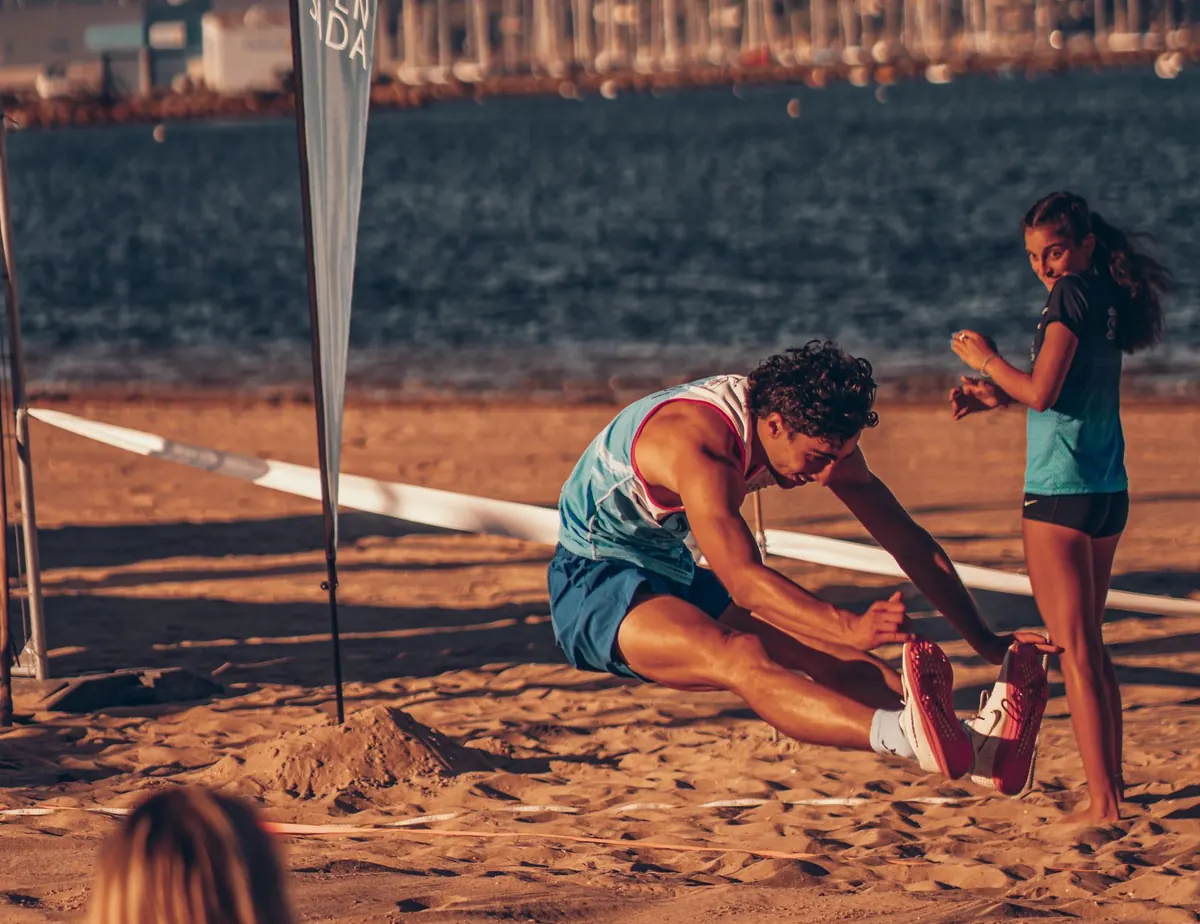
The long jump takeoff is a blur. One ground contact, a fraction of a second of drive, and then you're in the air. But almost nothing about that moment is decided in that moment. Your posture, your rhythm, and the way your hips travel through the last two strides set up everything that happens on the board. Foul by ten centimetres, or jump flat, and the cause is usually three strides earlier.
What follows is a checklist you can run before every jump, in order, from the moment you hit your check mark to the instant you leave the board. It won't fix a slow approach or weak legs. It will stop you wasting the speed you already have.
1. Posture: Tall Hips, Quiet Shoulders
Start with the position you're running from. A sprinter's posture is tall, with a line you could draw from the ankle through the hip to the shoulder. The forward lean should come from the ankles, not from folding at the waist. If your hips drop or your chest collapses, your stride shortens and your takeoff turns into a reach.
Three things to feel for in the last few strides:
- Hips high. Think about running over your legs, not sitting into them.
- Shoulders loose. Tight shoulders creep up into the neck and cost you arm speed. Shake your hands out before you step onto the runway.
- Eyes forward. Pick a target beyond the sand pit, a fence post or a tree, and keep your gaze there. Staring down at the board drops your hips and usually produces a stutter or a foul.
2. Rhythm: Fast Feet Through the Last Six Strides
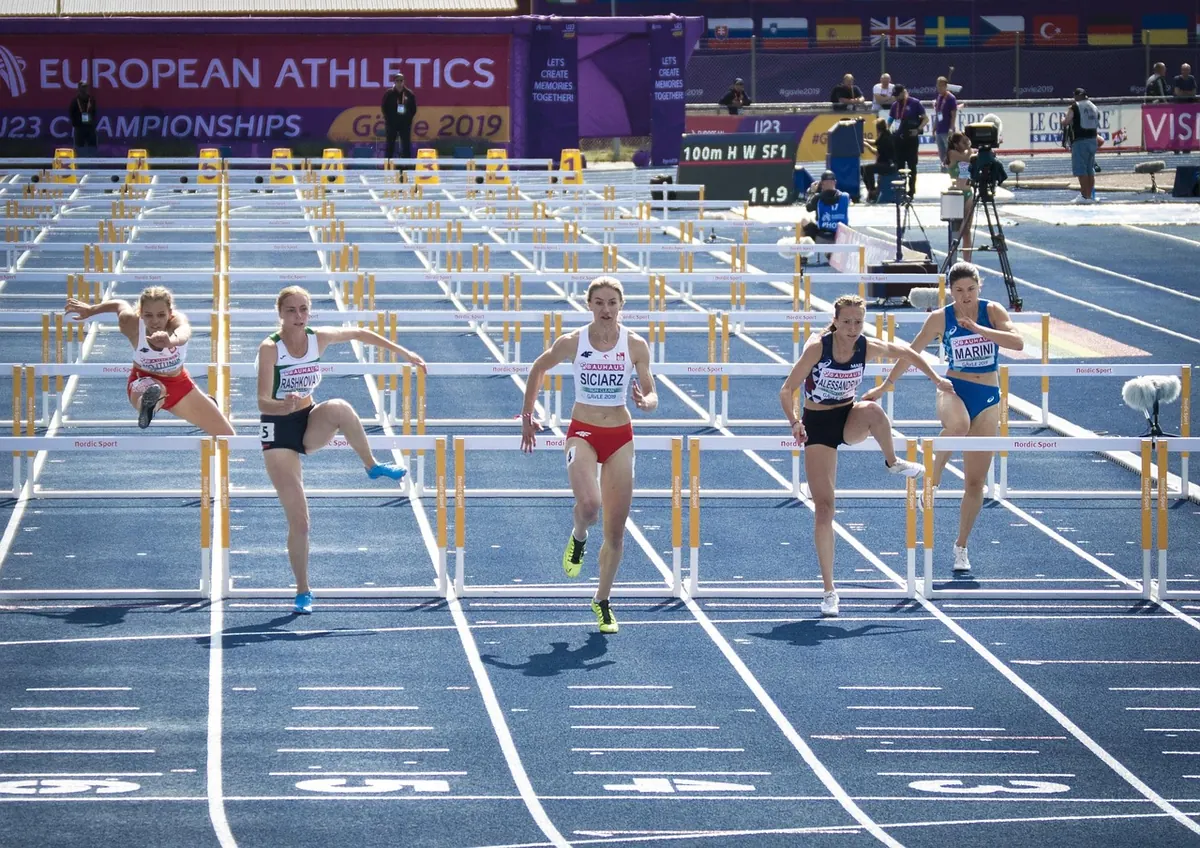
Your approach should keep getting faster all the way to the board, with the quickest and shortest strides coming last. If your final three strides feel longer and heavier than the ones before them, you've already spent your speed trying to hit the board hard.
Use a check mark and trust it. The board is not your target; the runway is. A useful cue in the closing strides is to think quick, quick, quick rather than jump. Listen to your own footfalls: the last two should sound like a fast double beat, not two heavy thuds.
3. The Penultimate Step: Tall, Flat, Under Your Hips
The penultimate step is the second-to-last one, and it's where most long jumps are won or lost. Its job is to lower your hips just enough to let the takeoff leg drive upward without slowing you down.
What it should feel like
The foot lands close to underneath you, not out in front, and the leg stays relatively tall and firm. Your hips settle slightly, then rise as you move onto the takeoff leg. That step is a little longer and flatter than the final one, but it should never feel like a lunge.
The mistake to watch for
Reaching on the penultimate step. When the foot lands ahead of your hips, you brake, your hips fall behind you, and the last step has to stretch to reach the board. The result is a shuffling, flat jump with almost no vertical drive.
Tall through the penultimate, quick through the last.
Say it out loud on run-throughs until it stops being a thought and starts being a habit.
4. Free-Leg Drive and Arm Action
As your takeoff foot plants, the free leg — the knee on the opposite side — drives forward and up, with the thigh rising toward horizontal. Drive the knee; don't flick the shin out early. A leg that swings out straight pulls your hips back and kills the lift you just created.
The arms work with it. In a double-arm takeoff, both arms swing from behind the hips up through the front, elbows bent around 90 degrees, hands finishing near shoulder height before they block and hold. If you carry a single arm, the arm opposite the takeoff leg does the work and the other stays controlled. Either way, resist letting your arms flail above your head at the moment of takeoff, because that tips your chest back.
Keep your torso tall through the drive. Collapsing forward at the waist is the fastest way to turn a good approach into an average jump.
5. Board Contact: Flat Foot, Brief Touch
The takeoff foot should land flat, or very slightly toes-first, with a firm ankle. Heel-first contact brakes you. A mushy ankle leaks the energy you spent the whole runway building. Aim for the foot to land roughly under your hips or just barely in front of them, never way out ahead. Long, stretched-out takeoffs look impressive and jump badly.
The touch itself should be brief. Think of stepping on something hot: you push the board down and behind you and leave it. You don't sink into it and you don't pause on it.
The direction matters as much as the contact. Jump up and through, with your chest rising and your knee driving, rather than flat out along the runway. You can't get distance without height, but you can't get height by jumping straight up either.
6. The Seven Checks in Order
- Hips high, chest up, eyes on a target beyond the board.
- Shoulders relaxed, hands loose, elbows bent.
- Last six strides getting faster and shorter, not longer.
- Penultimate foot landing under the hips, tall, no reaching.
- Takeoff foot flat and firm, just ahead of the hips.
- Free-leg knee driving up and through; arms swinging and blocking.
- Pushing the board behind you and holding your posture into the air.
Make It a Routine, Not a Lecture
A checklist is only useful if you run it the same way every time. Spread it across the runway: checks one to three belong to the approach, checks four to six to the last two strides, and check seven to the moment you leave the board. Give yourself one cue word — tall, quick, drive — and let the rest run on habit.
Then practise it below full speed. Three or four run-throughs at 85 or 90 per cent, thinking only about the penultimate step and the free-leg drive, will do more for your takeoff than a dozen all-out jumps with no attention paid to either. Save the full-speed attempts for when the pattern feels right.
One practical note: if ankle, knee or lower-back pain shows up on every takeoff and doesn't settle with rest, have a qualified physio or sports doctor look at it before you keep jumping on it. Technique work goes much better on a body that isn't hurting.
Get the posture right, keep the rhythm quick, drive the knee, touch the board lightly. Do those in that order and the takeoff mostly takes care of itself.