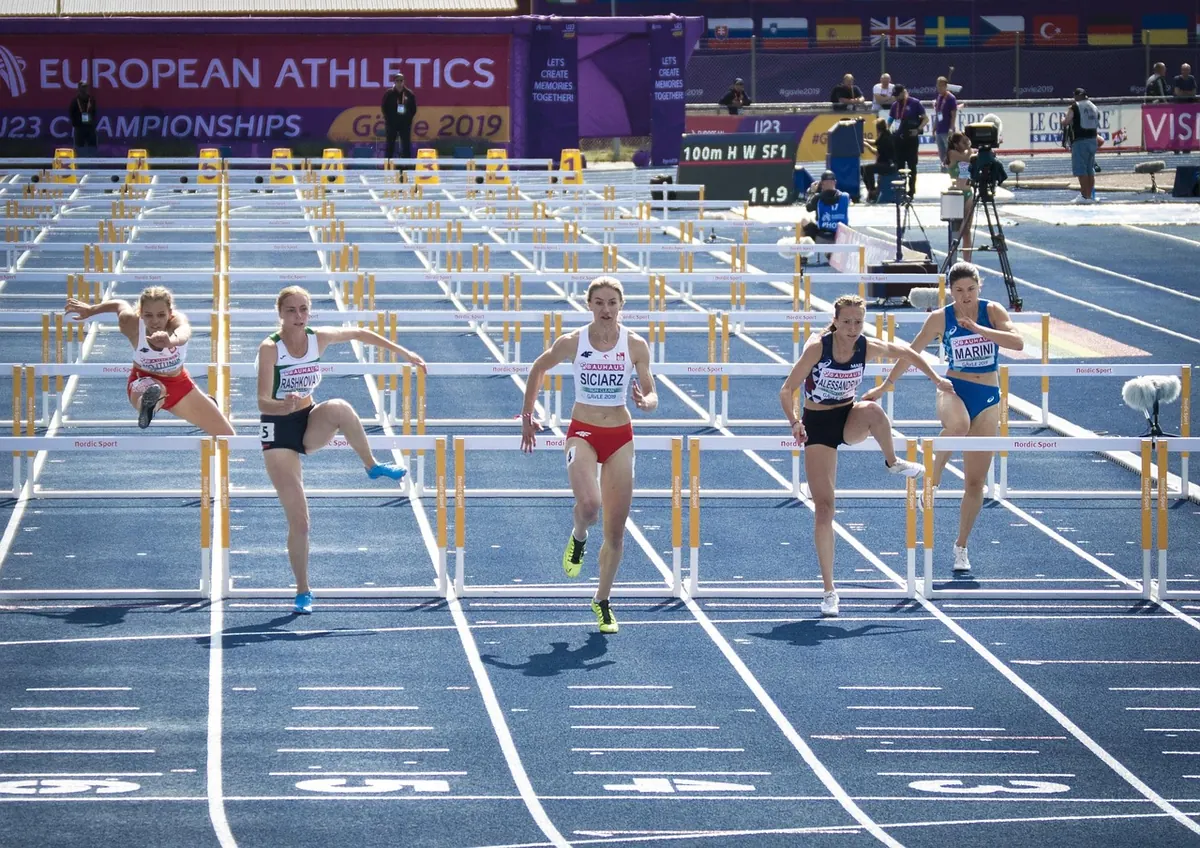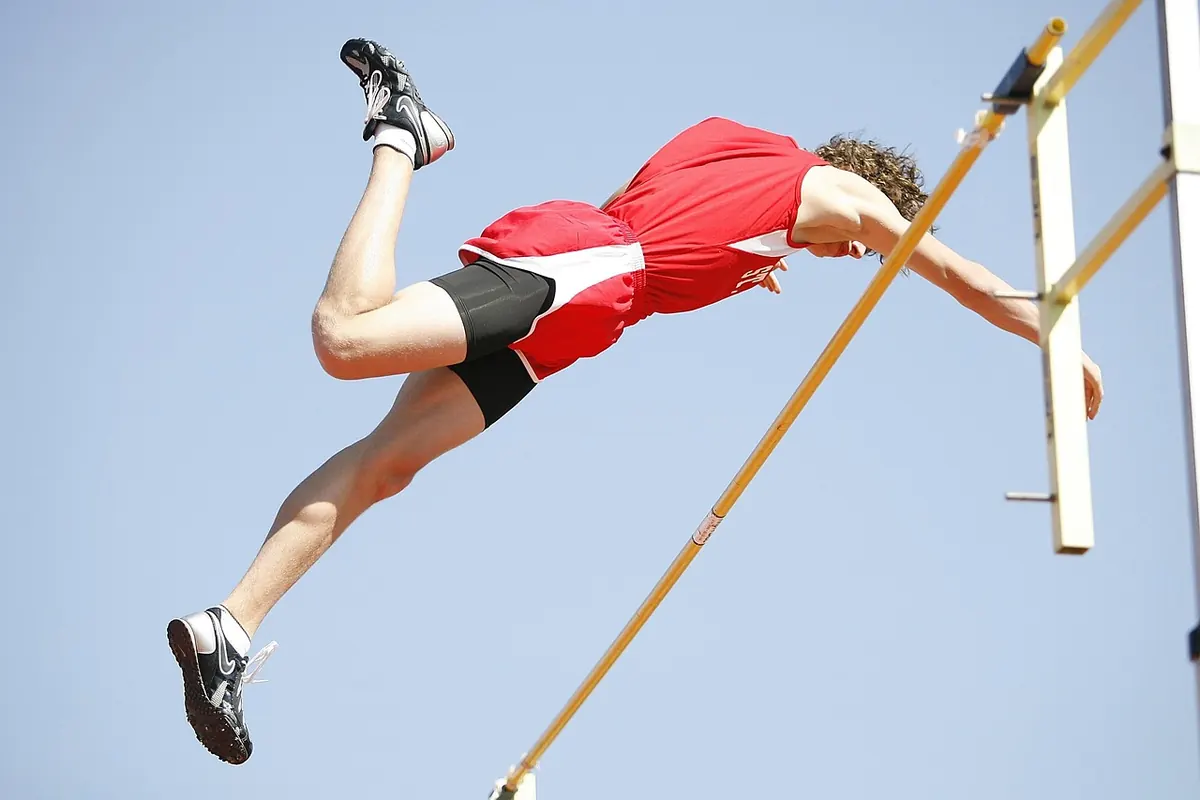
Watch the triple jump from the grandstand and it can look like a controlled fall that happens to cover a dozen metres. Watch it from the runway and it looks like something else entirely: a rhythm. Hop, step, jump. Three contacts, one sound, and three takeoffs that demand almost as much as the long jump does.
Beginners almost always lose distance in the same place. Not at the board, not in the sand, but in the space between the first landing and the second takeoff. That gap is where speed goes to die. Fix it and the event starts to make sense.
Think rhythm, not three separate jumps
A triple jump is not three jumps stacked together. It is one run that keeps going after the board, handed from one leg to the other.
The sequence is fixed. You take off from one foot and land on that same foot — the hop. From that foot you take off again and land on the opposite foot — the step. From that other foot you take off a final time and land in the sand on both feet — the jump. Your takeoff leg does the hop and the step. The other leg finishes the job.
Because of that, the event rewards jumpers who can stay tall, stay patient, and keep their hips underneath them through two rough landings. Think of it as carrying your running speed across three contacts rather than throwing three big efforts at the runway.
Your approach sets this up. A shorter run you can accelerate through and hold is worth more than a long run you sprint and then fade. Most beginners do better building to about 90 percent of top speed and staying there, rather than going flat out and arriving at the board already slowing down.
Balancing the hop and the step
The hop: small on purpose
The hop feels like the exciting part, and that is exactly why it gets ruined. A hop that lands well out in front of your hips works like a brake. Keep it low, land roughly under your body, take the impact through a flat or slightly ball-first foot, and get off the ground again quickly.
A useful cue is "land short, leave fast." If you hear your landing slap the runway, you are reaching. If you feel like you are sitting down when you land, you are too low and too far forward.
The step: where the distance hides
The step feels the strangest at first, because you land on the opposite foot and have to turn a braking contact into a takeoff. Posture matters more here than anywhere else. Stay tall, keep the chest up, drive the free knee through, and let the arms swing hard to help you off the ground.
As a rough target, aim for the three phases to feel reasonably balanced. A hop that runs away with the jump is far more common than a hop that is too short. If your hop is enormous and your step turns into a stumble, you have found your fix.
Choosing your takeoff leg
Which foot belongs on the board? Try this. Take a six-stride approach and hop three times off one foot onto grass, then switch and do the same on the other foot. Notice which side lets you land balanced, stay tall, and keep moving. Then try a short standing triple jump on each side — no approach, just hop, step, and land in the sand.
Coaches disagree about whether the takeoff leg should be the stronger one or the weaker one, so do not get stuck on theory. What matters at this stage is balance and control. Once you choose, stay with it for a full season. Mark the start of your approach with tape and check it every session. Swapping feet because one jump felt bad will cost you months.
Drills that build the rhythm
Do these on grass or a soft track surface, in small doses. Six good reps beat twenty sloppy ones, and the landings are the part your body has to absorb.
- Standing triple jump. From two feet, hop, step, and land in the sand. It teaches the sequence without approach speed getting in the way. Five or six reps is plenty.
- Short-approach rhythm hops. Four to six strides, then hop, hop, step, and run out. The goal is the sound: three even contacts, no pause between them.
- Alternate-leg bounds. Bound down a straight line, switching legs each contact. Keep the distance short and focus on tall posture and quick ground contact.
- Step-and-jump drill. Take off from six to eight strides, land on the opposite foot, and jump straight into the pit. This isolates the phase beginners find hardest.
- Landing practice. Jump into the sand from a short run and land on both feet, arms forward, hips up, knees bent. Weak landings leak distance at the very end of the jump.
A simple first month
Two or three sessions a week is enough while you are learning. Start each one with a proper warm-up, some skips, and a few strides on the runway. Then pick two drills from the list and give them your full attention. Finish with three or four full jumps from a short approach, not a long one.
Keep a note of your approach mark and which foot you take off from. Film a couple of jumps from the side, if you can — beginners are routinely surprised by how much their hop reaches and how much their step shrinks. Watch the feet, not the sand.
If your knees, shins, or heels stay sore for more than a few days, back off the jumping and get the problem looked at by a physiotherapist or sports doctor. Plyometric work loads the legs hard, especially for younger athletes who are still growing.
Taking it to the runway
Learn the rhythm first, and distance follows. A beginner who hops short, stays tall, and keeps moving will outjump someone who tries to win the event on the first contact every time.
So keep the plan simple: one takeoff leg, a controlled approach, a hop that stays under you, and a step that finishes with a real jump into the pit. Add speed gradually over a season rather than borrowing it all at once. Ask a coach or an experienced jumper to watch one session and tell you which phase is falling apart — that single piece of feedback is usually worth more than another week of guessing.
Photo: Pexels / Pixabay