Most beginner vaults are decided before the vaulter leaves the ground. Not at the bar, and not at the top of the inversion, but in the plant and the first two-tenths of a second after takeoff. A fast run and a brave swing will not save a pole that goes up late, a takeoff foot that lands too far out front, or arms that collapse the moment the pole loads. The encouraging part is that plant, takeoff, and swing are habits you build, not gifts you are born with.
What follows is the sequence you actually feel on the runway: carry, plant, takeoff, swing, and connection. Work through it before every attempt until the checkpoints stop being words and start being sensations.
Set Up the Run Before You Think About the Plant
Bad plants usually begin three strides earlier. If your posture is already crumbling at the penultimate step, no amount of arm speed will fix the pole. So start with the carry: top hand at roughly hip or lower-rib height, bottom hand around chest or chin height, elbow relaxed, pole tip steady and slightly above eye level. The pole should feel like a passenger, not a flag you are waving.
The last three strides are where the vault is made. The penultimate step is a little longer and lower, loading the leg that will push you into the takeoff. The final step is quick and short, landing close under your body. The cue most coaches use is simple: tall, tall, quick. Tall posture, tall hips, quick last step. If you are reaching for the takeoff spot, you are already behind.
The Plant: Push Up, Do Not Reach Forward
The plant begins two to three strides from the box and finishes as your takeoff foot hits. The top hand drives up and slightly forward, aiming the pole tip into the back of the box, so the pole is coming toward vertical as you leave the ground. The bottom hand guides the pole into place; it does not yank it down or drag it sideways. Keep your chest tall and your eyes up.
The plant is not a throw. It is a push into the box that finishes at the exact moment your takeoff foot lands.
The most common beginner error is planting late while leaning forward, which drops the hips behind the takeoff foot and puts you under the pole. If you feel the pole hit the back of the box after your foot lands, shorten your approach by a stride or two and slow the run down until the timing returns. Speed is only useful when the plant is on time.
Takeoff: Take the Free Ride
A good takeoff looks calm. Your takeoff foot lands under your top hand or just barely in front of it. Your body is tall and stacked, not sitting back with your shoulders behind your hips. The free knee drives up and forward, and the hips travel forward and upward through the jump rather than sagging backward.
Three checkpoints for takeoff:
- Foot position: under the top hand, not out in front of it. If you can see your foot reach forward, you are too far out.
- Posture: tall through the chest and hips. Do not arch back or fold at the waist.
- Direction: up and forward, not sideways or backward. The vault is a jump first.
Jumping sideways is common in new vaulters who are anxious about the box. It costs you the swing before the swing even starts, because your hips are already moving away from the pole.
The Swing: Long First, Then Fast
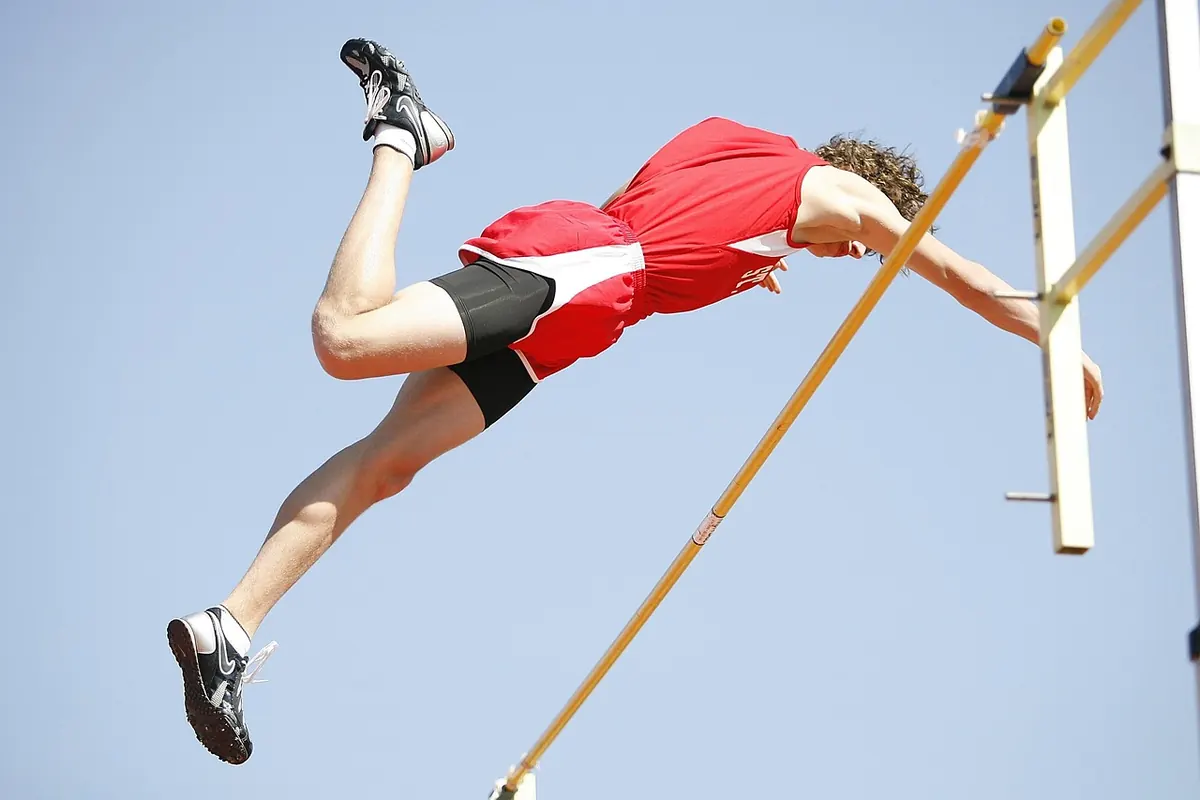
The swing has two distinct parts, and blending them too early is what makes beginners curl into a ball. First, keep the trail leg long and swing it from the hip, like a pendulum with a slightly soft knee. This long swing builds the energy that lifts your hips. Only as the pole bends and your hips rise should the knee come through and the hips travel toward the pole.
Two cues help here. Say "long" as you leave the ground, and "fast" as your hips rise. Do not pull with your arms too early; the arms follow the swing rather than leading it. If you feel your shoulders and back doing all the work, your swing is late and probably too short.
Staying Connected to the Pole
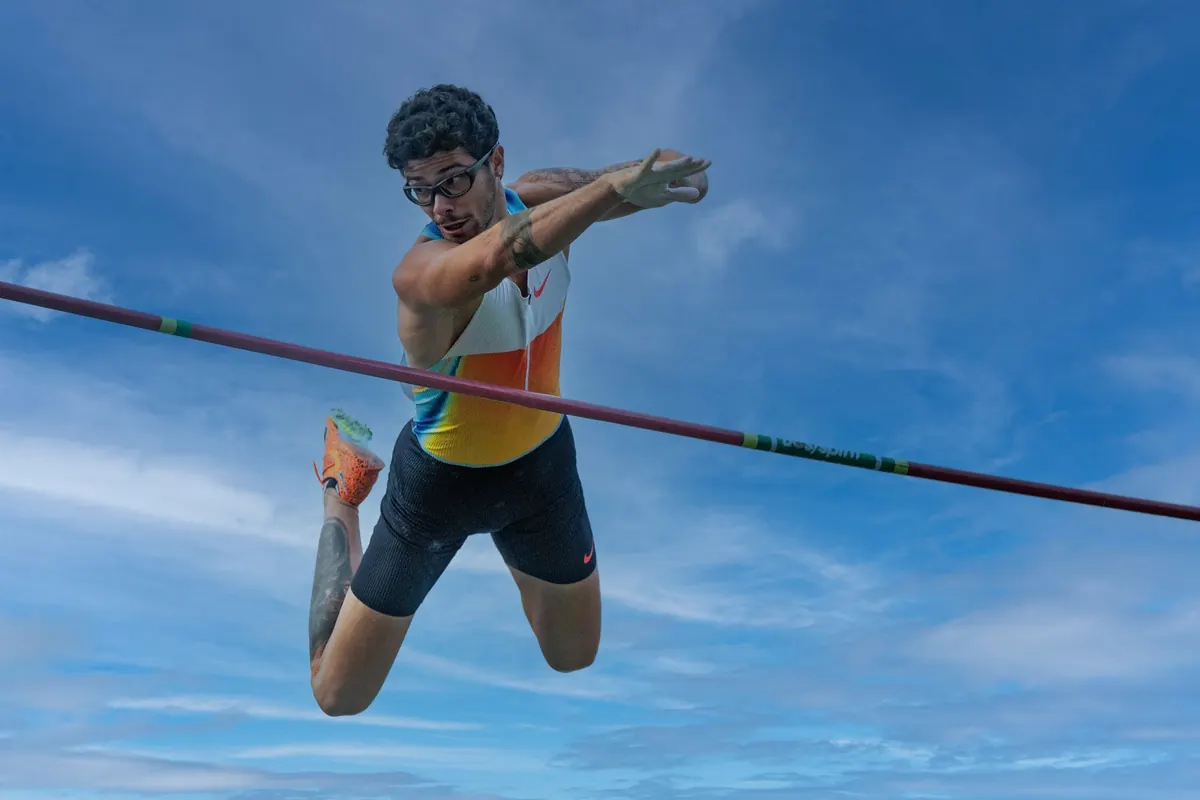
Connection is the feeling of continuous pressure from your hands into the pole. There is no gap, no moment where you float free and then grab back on. The top hand presses against the pole as it bends, and the bottom hand keeps its elbow up rather than letting the arm fold. Look up and slightly forward, not at your feet or the runway.
Signs you have lost connection:
- The bottom arm collapses toward your face at takeoff.
- Your hips drop away from the pole instead of riding it up.
- You feel weightless in the middle of the vault, then heavy at the top.
- Your grip feels like it is sliding even though your hands are fixed.
When connection breaks, go back to short approaches and straight-pole plants. Rebuilding pressure at low speed is faster than trying to fix it at full speed.
A Pre-Attempt Checklist
- Pole carry relaxed, top hand low, tip steady.
- Last three strides tall, tall, quick.
- Plant starts two to three strides out and finishes on the takeoff step.
- Takeoff foot under the top hand.
- Chest tall, free knee driving up and forward.
- Trail leg long off the ground.
- Hips swing toward the pole as the knee comes through.
- Top hand pressing, bottom elbow up, eyes forward.
- One cue only for this attempt. Pick it and commit.
How to Practice This Without Overloading Your Head
You cannot think about nine checkpoints at full speed, and you should not try. Choose one cue per session: plant timing on Monday, takeoff position on Wednesday, long-then-fast swing on Friday. Use three- to five-stride approaches and straight-pole plants to groove the timing before you add run length. Have someone film from the side so you can see whether your foot lands under your top hand and whether your trail leg stays long.
Work with a qualified coach, on a properly set up pit, with poles rated for your body weight, and never vault alone. If something in your shoulder, back, or wrist hurts, stop and get it checked by a medical professional rather than vaulting through it. Progress in this event comes from repeating good positions at speeds you can control, then letting the runway get longer as the positions hold.
Photo: Oliver Wagenblatt / Pexels